
Data Breaches
Do I Need PCI DSS? Determine Your Scope and Compliance Obligations
You remain liable for cardholder data breaches even if you outsource processing to a third-party payment gateway or cloud provider.
You remain liable for cardholder data breaches even if you outsource processing to a third-party payment gateway or cloud provider.

Gift cards function as digital cash for attackers because they combine instant liquidity with near-total anonymity, bypassing traditional financial fraud detection systems.

Alert fatigue causes operators to miss genuine threats because the sheer volume of noise desensitises them to critical signals, turning your defence tools into liabilities.

Most organisations measure control existence rather than control effectiveness, leaving critical detection gaps invisible to standard compliance checklists.
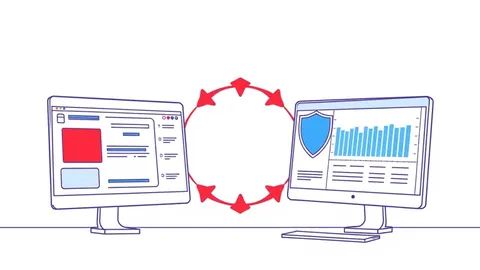
Purple teaming is not a single event but a continuous feedback loop that aligns attack simulation with detection engineering to close specific security gaps.

Attackers rarely break into tax systems directly; they steal credentials from unrelated breaches and use them to file returns before the legitimate taxpayer notices.

AiTM phishing captures live session tokens rather than passwords, rendering traditional multi-factor authentication largely ineffective against this specific attack vector.

Pirated software bypasses standard security controls by exploiting the victim’s own trust, turning your desire for free tools into a direct execution privilege for attackers.

Cloud providers cannot decrypt your data without your key, but they can still block access if you lose control of the key management system.

Isolating the control plane prevents lateral movement, but snapshotting the compromised state first preserves evidence for forensic analysis and root cause determination.

Attackers bypass credential theft by using legitimate authorisation screens to steal access tokens directly from trusted identity providers.

EDR systems often generate more noise than signal, requiring teams to tune behavioural baselines rather than relying on static signature matching for true security.

Most alerts fail because analysts check symptoms before verifying the underlying mechanism, wasting hours on noise that masks real compromise.
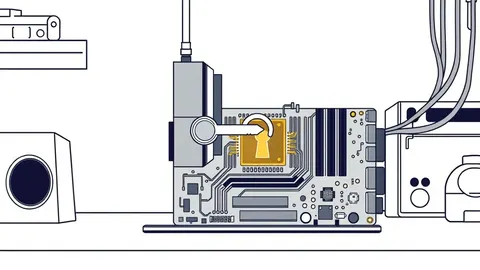
Unverified firmware updates bypass operating system security controls, granting attackers permanent root access that survives every hardware reset and reinstallation.

Endpoint telemetry transforms raw binary noise into structured intelligence, yet the collection phase often discards the context needed to prove intent.

Attackers forge email headers to mimic trusted senders, bypassing basic address checks while hiding the true origin of the message.

Identity theft protection fails when it relies solely on passwords, as attackers exploit the gap between authentication and authorisation in modern systems.

Visibility controls do not equal security, and internal permissions often fail when storage moves to public cloud infrastructure without reconfiguration.

Most organisations fail at user and entity behaviour analytics because they treat it as a monitoring tool rather than a modelling exercise that requires continuous baseline refinement.

Your password manager does not store your secrets; it stores encrypted data that only your master key can unlock, meaning the vendor cannot recover them if you forget them.

Incident response reacts to confirmed alerts, while threat hunting proactively searches for hidden adversaries that bypassed existing detection controls.

Restricting permissions reduces your attack surface but creates operational friction that can slow incident response and break automated workflows if not managed correctly.

Most teams treat software composition analysis as a compliance checklist rather than a continuous control, leaving supply chain risks dormant in production.

Static analysis fails against modern polymorphic threats, making behavioural observation in isolated environments the only reliable detection method.