Threat Hunting vs Incident Response: Distinct Roles in Defence
Incident response reacts to confirmed alerts, while threat hunting proactively searches for hidden adversaries that bypassed existing detection controls.

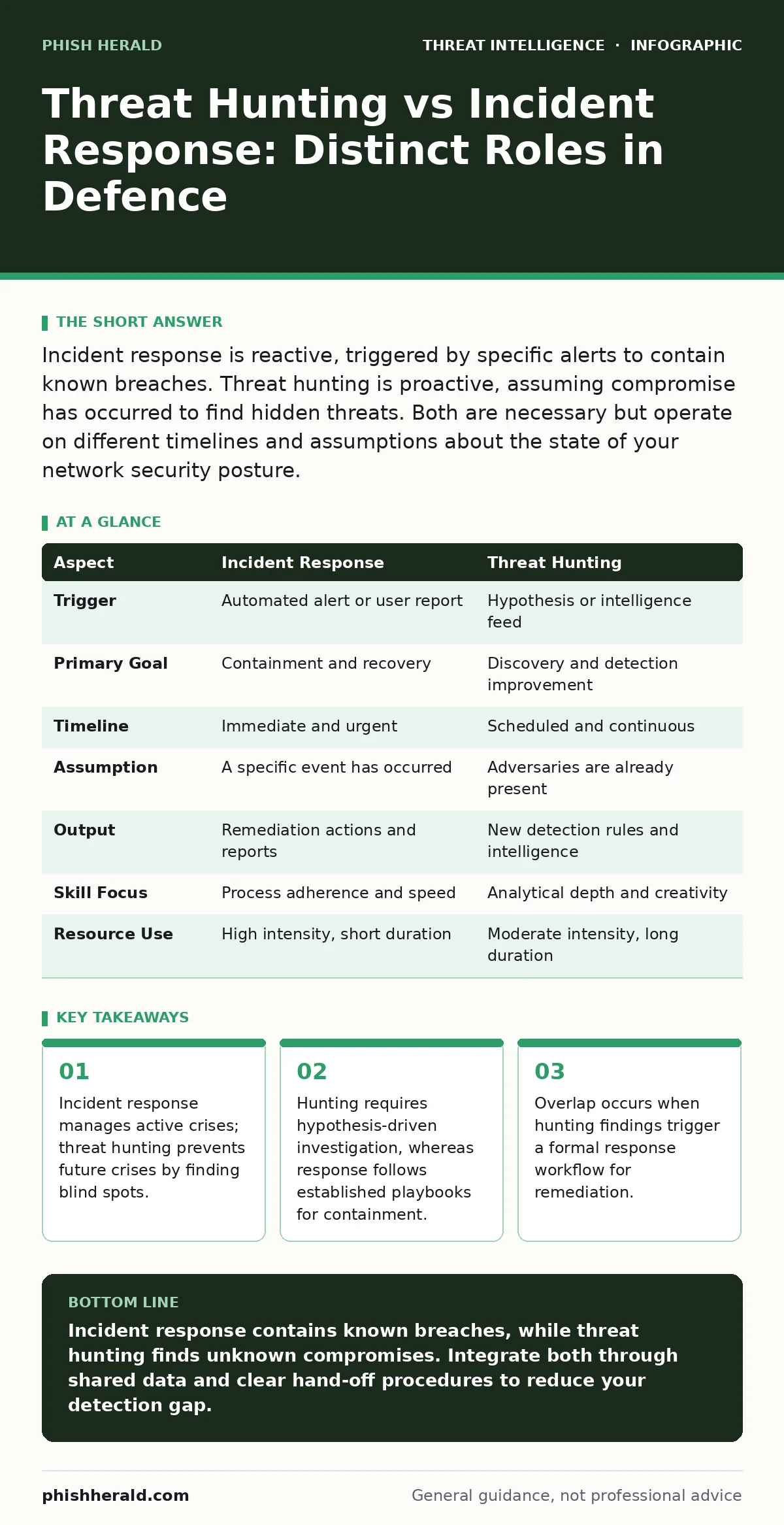
Incident response is reactive, triggered by specific alerts to contain known breaches. Threat hunting is proactive, assuming compromise has occurred to find hidden threats. Both are necessary but operate on different timelines and assumptions about the state of your network security posture.
The Core Distinction Between Reaction and Search
Incident response and threat hunting serve distinct purposes within your security operations centre. Incident response is a reactive discipline. You activate it when an alert confirms a security event requires immediate attention. The goal is containment, eradication, and recovery. Threat hunting is proactive. You conduct it assuming adversaries are already present but undetected. The goal is discovery and improving detection logic. One manages a fire; the other searches for smouldering embers before they ignite.
Defining Incident Response Mechanics
Incident response relies on structured playbooks. When a security information and event management system generates a high-fidelity alert, responders follow predefined steps. They isolate affected systems to stop lateral movement. They preserve evidence for forensic analysis. The process is linear and time-sensitive. Speed determines the extent of damage. Response teams focus on the known indicator of compromise. They do not typically look beyond the immediate scope of the alert unless the investigation reveals broader infection. This focus ensures resources are not wasted on speculative leads during a crisis.
Defining Threat Hunting Methodologies
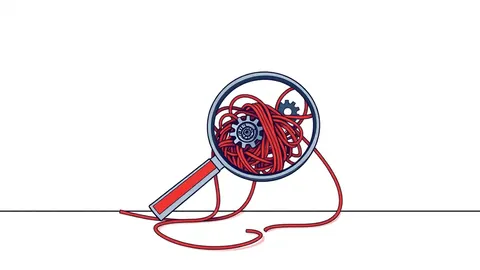
Threat hunting operates without a specific alert. Hunters start with a hypothesis. They might suspect a specific tactic, such as pass-the-ticket attacks, is being used against their infrastructure. They query logs and network traffic to validate or refute this suspicion. If the hypothesis is wrong, they refine it. If correct, they find new indicators of compromise. This process improves your detection rules. It turns silent attacks into visible alerts. Hunting is iterative and exploratory. It requires deep knowledge of normal baseline behaviour to spot anomalies that automated tools miss.
Comparative Analysis of Operational Models
| Aspect | Incident Response | Threat Hunting |
|---|---|---|
| Trigger | Automated alert or user report | Hypothesis or intelligence feed |
| Primary Goal | Containment and recovery | Discovery and detection improvement |
| Timeline | Immediate and urgent | Scheduled and continuous |
| Assumption | A specific event has occurred | Adversaries are already present |
| Output | Remediation actions and reports | New detection rules and intelligence |
| Skill Focus | Process adherence and speed | Analytical depth and creativity |
| Resource Use | High intensity, short duration | Moderate intensity, long duration |
When to Prioritise Incident Response
Choose incident response when you have confirmed evidence of a breach. You need to stop data exfiltration immediately. The situation requires legal and regulatory notification. Standardised procedures reduce error under pressure. Response is necessary when customer trust is at risk. Delaying response increases financial and reputational harm. Use response when the scope of the incident is clear. Do not use response resources for speculative investigations. Reserve these teams for active fires. They are not designed for long-term background searches.
See also: Multi-region failover: 6 common misconceptions corrected · Kubernetes Misconfiguration Response: Stop, Contain and Recover
When to Prioritise Threat Hunting
Choose threat hunting when your detection coverage has gaps. You suspect advanced persistent threats are operating below your noise floor. You have new threat intelligence suggesting a specific adversary tactic. You need to validate the effectiveness of your endpoint telemetry. Hunting is useful after a major incident to find related compromises. It helps you understand your blind spots. Use hunting when you have the time for deep analysis. It requires freedom from immediate operational pressures. Do not hunt when you are actively containing a breach.
The Critical Overlap and Feedback Loop
These disciplines are not isolated. They feed into each other. A hunt may uncover a hidden adversary, triggering an incident response. This hand-off must be seamless. Hunters provide context and initial evidence. Responders take over containment. Conversely, response teams often find new indicators during cleanup. They pass these to hunters. Hunters then build detection rules for these new indicators. This closes the loop. It prevents the same attack from succeeding again. Without this feedback, hunting is academic. Without hunting, response is always playing catch-up. Effective security requires both to share data via standards like STIX and TAXII.
Common Implementation Pitfalls
Organisations often force hunters to act as responders. This dilutes both functions. Hunters lose the time needed for deep analysis. Responders lack the focus for rapid containment. Another mistake is hunting without a hypothesis. This becomes random log searching. It yields low value and high fatigue. You must ground hunts in realistic adversary behaviour. Finally, failing to update detection rules after a hunt wastes the effort. The goal is not just finding the threat. It is ensuring the system finds it next time. This requires integration with your user and entity behavior analytics platform.
Sustaining Both Capabilities
You cannot choose one over the other. They are complementary. Incident response protects your current state. Threat hunting protects your future state. Allocate resources accordingly. Ensure your team understands the difference in mindset. Response demands discipline. Hunting demands curiosity. Both require rigorous training. Monitor the maturity of both functions separately. A strong response team does not compensate for weak hunting. A strong hunting team cannot contain an active breach. Balance is key to resilience against nation-state cyber attacks and other sophisticated threats.
Key takeaways
- Incident response manages active crises; threat hunting prevents future crises by finding blind spots.
- Hunting requires hypothesis-driven investigation, whereas response follows established playbooks for containment.
- Overlap occurs when hunting findings trigger a formal response workflow for remediation.
Incident response contains known breaches, while threat hunting finds unknown compromises. Integrate both through shared data and clear hand-off procedures to reduce your detection gap.
Frequently asked questions
Can the same person do both hunting and response?
It is possible for small teams, but it creates conflict of interest. Response requires speed and process adherence. Hunting requires slow, deep analysis. Context switching reduces effectiveness in both areas.
How do I know if my hunting is effective?
Measure the number of new detection rules created from hunts. Also track the time to detect for newly discovered techniques. If hunts rarely produce new detections, your hypotheses may be too generic.
Does threat hunting replace endpoint detection and response?
No. Endpoint detection and response provides the data and automation. Hunting uses that data to find what automation misses. They are layers of defence, not substitutes.
When should I start threat hunting?
Start when you have reliable data sources and a baseline of normal behaviour. Hunting without good data leads to false positives. Ensure your logging is comprehensive before investing heavily in hunting.
How this guide was produced: written by the Phish Herald editorial team with AI assistance, checked against the public references listed below, and reviewed when the facts change. See our editorial policy or report an error.