
Malware & Ransomware
Orgs Boost Threat Hunt Capacity as SentinelOne Cuts Malware Analysis to Hours With OpenAI
SentinelOne uses OpenAI Daybreak to reduce malware analysis time from weeks to hours, allowing faster threat investigation.
Malware & Ransomware coverage from Phish Herald holds 19 articles, 15 of them reference guides. The newest was published on October 15, 2026. New stories are added as soon as they are confirmed, from more than 150 sources checked as often as every 45 seconds. Each story lists its sources. Primary sources we follow for this section include UK National Cyber Security Centre and CISA: Stop Ransomware.
SentinelOne uses OpenAI Daybreak to reduce malware analysis time from weeks to hours, allowing faster threat investigation.

Cyber incidents in manufacturing rose to 17% in 2025, with attackers now bypassing office networks to disrupt production lines and OT systems directly.

Quarantine does not delete files; it encrypts and isolates them in a restricted folder, allowing you to recover data if the detection was a false positive.

Behavioural analysis catches zero-day threats that signature databases miss, offering small teams a scalable defence against evolving malware without heavy infrastructure.

Zero-day malware exploits unknown software flaws before vendors can patch them, leaving traditional signature detection entirely blind to the threat until it executes.

Signature based detection in cyber security identifies known threats with high precision but fails completely against novel code that lacks a recorded fingerprint.

A Canadian ransomware negotiator faces extortion charges as the FBI expands its global probe into the ShinyHunters hacking group.

A new banking trojan campaign evades detection by remaining dormant until infected users access specific financial websites, complicating automated analysis.
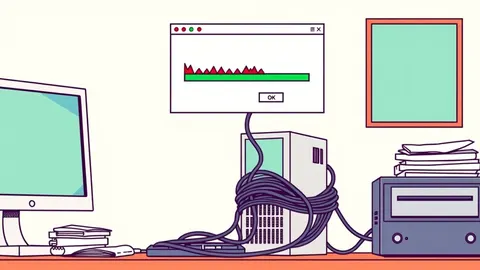
Pirated software bypasses standard security controls by exploiting the victim’s own trust, turning your desire for free tools into a direct execution privilege for attackers.

EDR systems often generate more noise than signal, requiring teams to tune behavioural baselines rather than relying on static signature matching for true security.

Static analysis fails against modern polymorphic threats, making behavioural observation in isolated environments the only reliable detection method.

The ransom note is rarely just a payment instruction; it often contains embedded metadata that reveals the attacker’s toolchain and operational security gaps.

Static analysis misses the mark when malware sleeps until execution; combining behavioural observation with automated sandboxes reveals the true intent of modern threats.

Rootkits hide by intercepting system calls, making standard security tools blind to their presence and allowing silent data exfiltration.
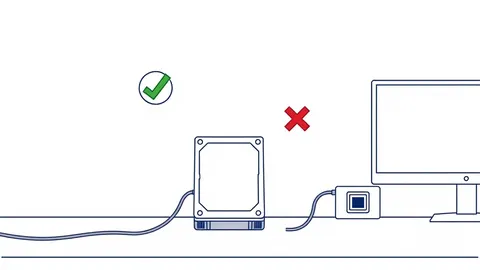
An offline backup is only secure if the storage medium remains physically disconnected from any network that could carry malware or ransomware.

Potentially unwanted programs often evade detection by masquerading as legitimate utilities, leaving subtle behavioural traces rather than obvious signatures in system logs.

Attackers now steal data before encrypting systems, forcing victims to pay twice or face public leaks that damage reputation beyond financial loss.

Eliminate unnecessary remote access, enforce conditional access policies, and monitor session behaviour to neutralise the most common attack vectors targeting your network perimeter.

Prevent supply chain attacks by isolating build environments and verifying package hashes, blocking threats before they reach production servers.