Double Extortion Ransomware: How It Works and How to Stop It
Attackers now steal data before encrypting systems, forcing victims to pay twice or face public leaks that damage reputation beyond financial loss.

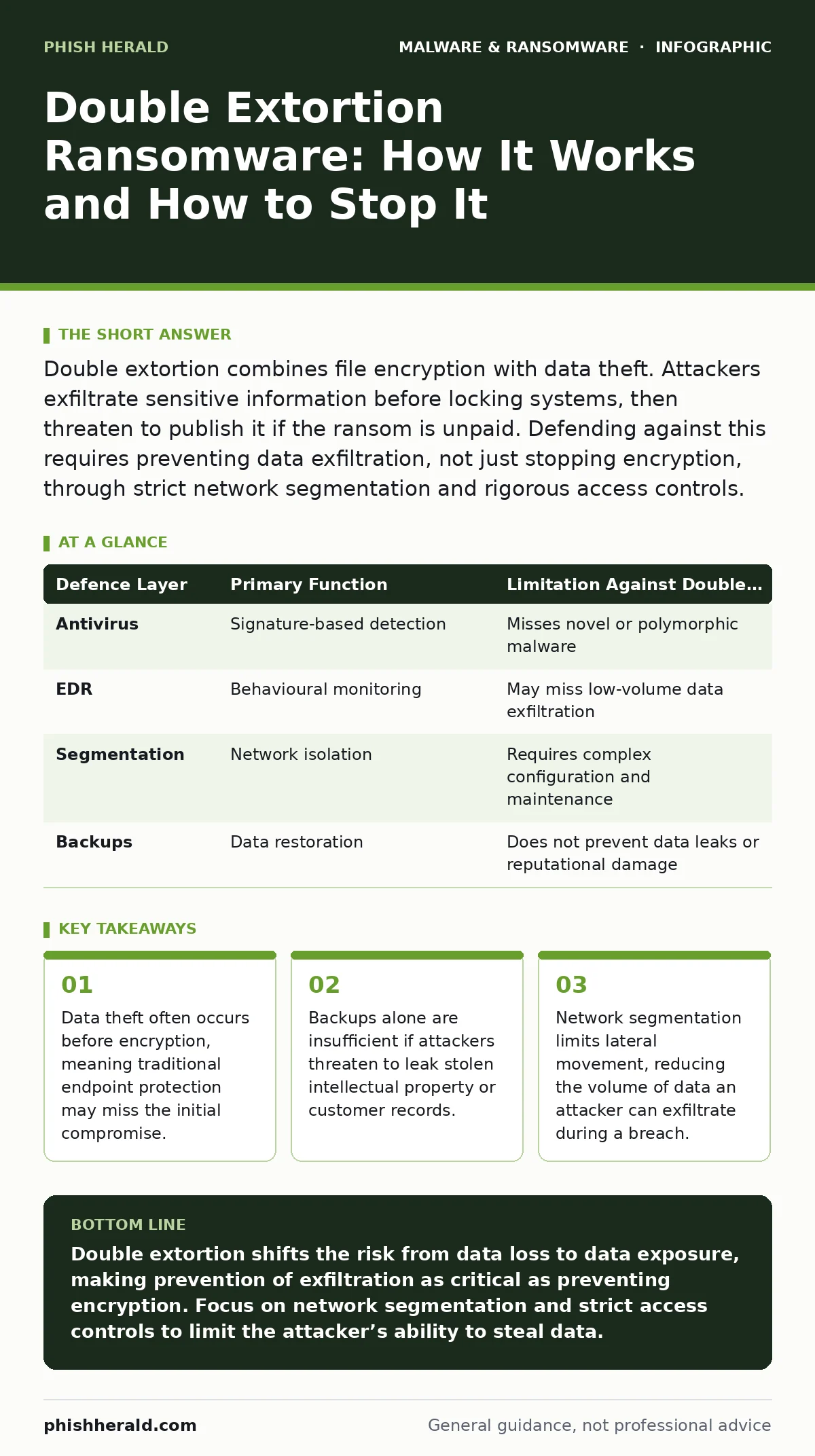
Double extortion combines file encryption with data theft. Attackers exfiltrate sensitive information before locking systems, then threaten to publish it if the ransom is unpaid. Defending against this requires preventing data exfiltration, not just stopping encryption, through strict network segmentation and rigorous access controls.
What distinguishes double extortion from traditional ransomware?
Traditional ransomware encrypts files, demanding payment for the decryption key. Double extortion adds a second layer of pressure by stealing data before or during the encryption process. Attackers threaten to publish this stolen information publicly if the victim refuses to pay. This shifts the risk from operational downtime to reputational damage and regulatory penalties. You cannot simply restore from backups because the data remains in the attacker’s possession.
How do attackers exfiltrate data so quickly?
Attackers use automated tools to search for sensitive directories and copy data over standard protocols. They often leverage legitimate administrative accounts to blend in with normal network traffic. This allows them to move large volumes of data without triggering immediate alarms. The speed of exfiltration depends on network bandwidth and the efficiency of their scanning scripts. They prioritise high-value targets like financial records, intellectual property, and personal identifiable information.
Why does endpoint detection and response (EDR) often fail to stop this?
Endpoint detection and response (EDR) focuses on behavioural anomalies on individual devices. While effective against execution, it often struggles with the stealthy data movement phase. Attackers may use low-and-slow exfiltration techniques that fall below detection thresholds. They might also encrypt data in memory before writing it to disk, hiding the payload from file-scanning agents. Relying solely on endpoint tools leaves the network perimeter and lateral movement paths exposed.
Does having offline backups solve the problem?
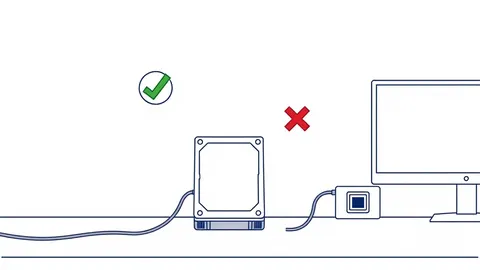
Offline backups protect your ability to restore encrypted files without paying the ransom. However, they do nothing to prevent the publication of stolen data. If attackers have already exfiltrated sensitive records, restoring systems leaves you vulnerable to the second extortion demand. You face a choice between paying to prevent leaks or accepting the reputational harm of a public breach. Backups are a recovery tool, not a prevention strategy for data theft.
How can network segmentation reduce the damage?
Network segmentation divides your infrastructure into isolated zones with strict access controls. If an attacker breaches one segment, they cannot easily move to others to steal more data. This limits the scope of exfiltration to a specific subset of systems. Implementing micro-segmentation ensures that even with valid credentials, an attacker faces barriers at every hop. This containment strategy buys time for detection and response teams to isolate the threat.
| Defence Layer | Primary Function | Limitation Against Double Extortion |
|---|---|---|
| Antivirus | Signature-based detection | Misses novel or polymorphic malware |
| EDR | Behavioural monitoring | May miss low-volume data exfiltration |
| Segmentation | Network isolation | Requires complex configuration and maintenance |
| Backups | Data restoration | Does not prevent data leaks or reputational damage |
See also: Network segmentation examples: how to isolate threats and limit damage
What role does remote access tool abuse play in this attack?
Attackers often gain initial access through compromised remote access tools. These tools provide legitimate administrative privileges, making malicious activity look like normal maintenance. Once inside, they use these tools to move laterally and access central file servers. Securing remote access requires multi-factor authentication and strict least-privilege principles. Monitoring for unusual remote access patterns is critical for early detection.
How should you respond if data has been stolen?
Immediate containment is the first priority to stop further data loss. Isolate affected systems from the network to prevent lateral movement. Notify legal and compliance teams to assess regulatory obligations regarding data breaches. Do not delete logs or forensic evidence, as this may hinder investigation. Prepare a communication plan for stakeholders, acknowledging the breach without admitting liability prematurely.
Can sandboxing prevent the initial infection?
Sandboxing executes suspicious files in an isolated environment to observe their behaviour. This can prevent malware from running on production systems. However, advanced attackers use techniques to detect sandboxes and remain dormant. They may delay malicious actions until the file is executed on a real host. Sandboxing is a useful defence-in-depth measure but not a silver bullet against sophisticated threats.
What is the long-term impact of a double extortion attack?
The financial cost extends beyond the ransom demand to include legal fees, regulatory fines, and customer churn. Reputational damage can erode trust, leading to long-term revenue loss. Regulatory bodies may impose stricter oversight, increasing compliance burdens. The psychological impact on staff can also affect productivity and morale. Recovery involves not just technical restoration but rebuilding stakeholder confidence.
How does browser isolation protect against initial access?
Browser isolation runs web sessions in a remote, isolated container, separating the user’s device from the internet. This prevents malicious code downloaded from websites from executing on the local machine. Many initial compromises occur via drive-by downloads or malicious links. By keeping the browser environment separate, you reduce the attack surface significantly. This is particularly effective against phishing attacks that lead to credential theft.
What steps should you take to harden your defences?
Implement strict least-privilege access controls to limit what accounts can do. Regularly audit user permissions and remove unnecessary administrative rights. Deploy multi-factor authentication across all remote access points. Conduct regular penetration testing to identify weaknesses in your segmentation. Train staff to recognise sophisticated phishing attempts, as human error remains a primary vector.
Key takeaways
- Data theft often occurs before encryption, meaning traditional endpoint protection may miss the initial compromise.
- Backups alone are insufficient if attackers threaten to leak stolen intellectual property or customer records.
- Network segmentation limits lateral movement, reducing the volume of data an attacker can exfiltrate during a breach.
Double extortion shifts the risk from data loss to data exposure, making prevention of exfiltration as critical as preventing encryption. Focus on network segmentation and strict access controls to limit the attacker’s ability to steal data.
Frequently asked questions
Can I trace the attackers after a double extortion attack?
Tracing attackers is difficult due to their use of anonymisation tools and infrastructure in multiple jurisdictions. Law enforcement may assist, but recovery of funds or data is rare.
Should I pay the ransom to avoid data leaks?
Paying does not guarantee the attacker will delete the data or cease threats. It also encourages further attacks and may violate legal restrictions in some regions.
How do I know if my data has been exfiltrated?
Look for unusual outbound traffic volumes, especially to unknown destinations. Monitor for large file transfers during off-hours and check for new administrative accounts.
Is air-gapping enough to prevent double extortion?
Air-gapping helps prevent remote access but does not protect against insider threats or physical access. Attackers may use removable media to bridge the gap.
How this guide was produced: written by the Phish Herald editorial team with AI assistance, checked against the public references listed below, and reviewed when the facts change. See our editorial policy or report an error.