Do I Need PCI DSS? Determine Your Scope and Compliance Obligations
You remain liable for cardholder data breaches even if you outsource processing to a third-party payment gateway or cloud provider.
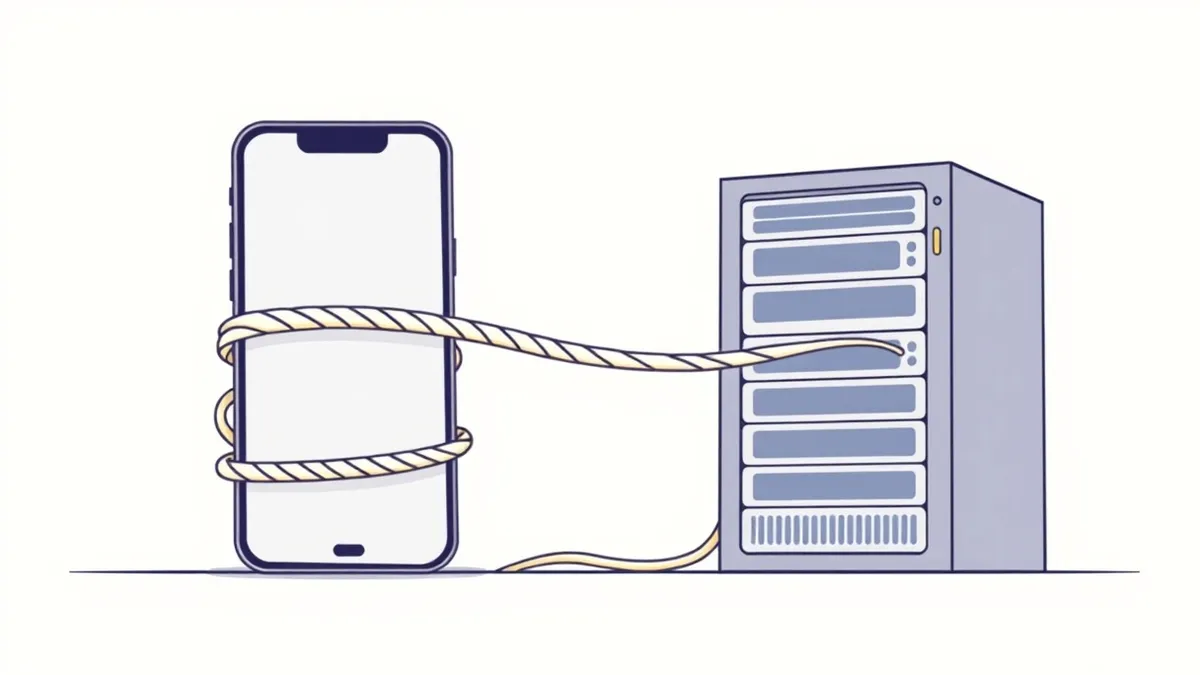
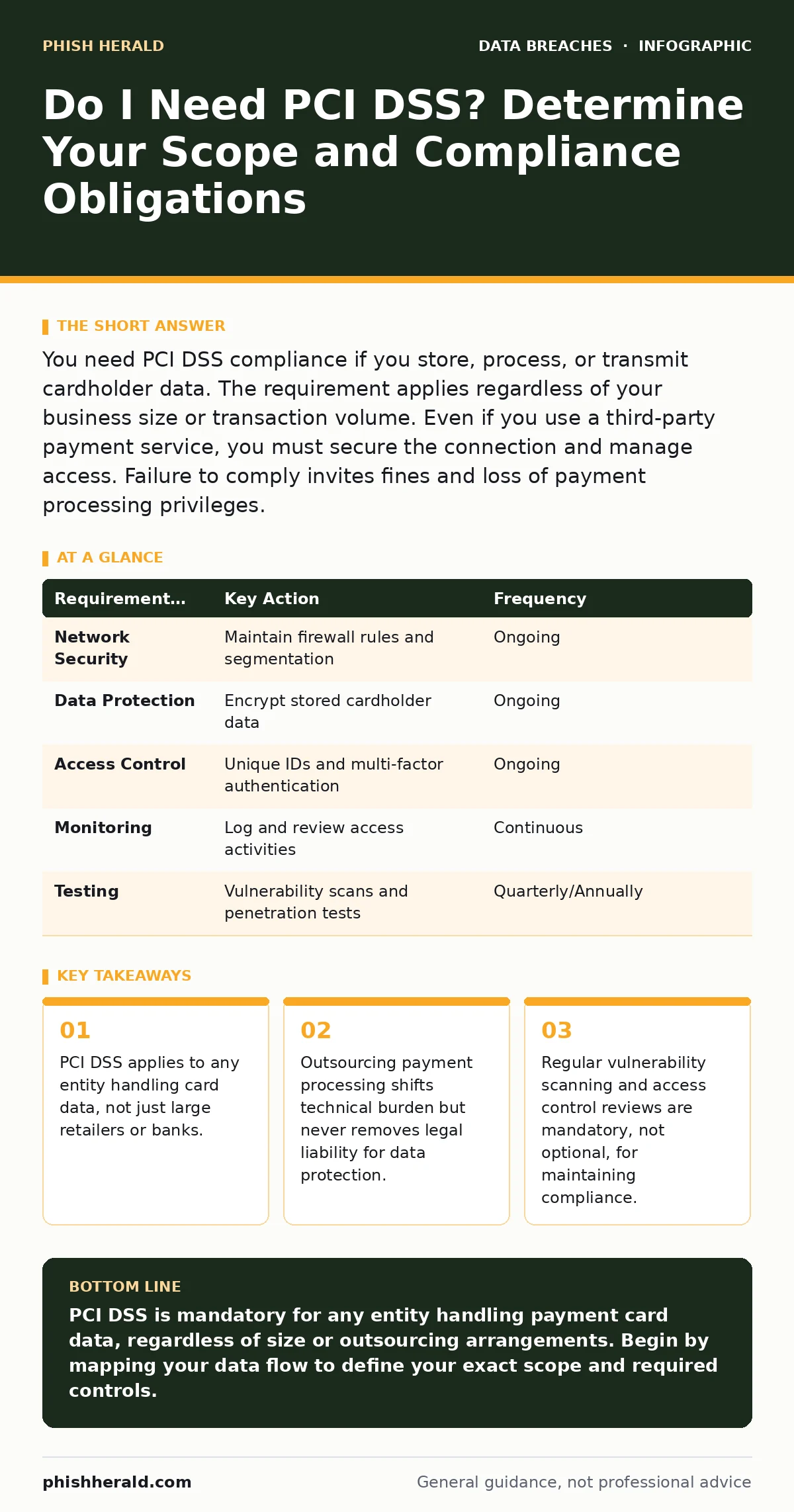
You need PCI DSS compliance if you store, process, or transmit cardholder data. The requirement applies regardless of your business size or transaction volume. Even if you use a third-party payment service, you must secure the connection and manage access. Failure to comply invites fines and loss of payment processing privileges.
Do I need PCI DSS compliance for my business?
You need PCI DSS compliance if you accept, process, store, or transmit payment card information. This obligation applies to every organisation that handles cardholder data, regardless of industry or size. The Payment Card Industry Data Security Standard governs how you protect sensitive financial details. Ignorance of the standard does not exempt you from liability. If a breach occurs, card brands and acquiring banks will hold you accountable for failing to meet these security baselines.
What counts as storing or processing card data?
Storing or processing includes capturing card numbers, expiration dates, or security codes at any stage of the transaction lifecycle. This covers point-of-sale terminals, web checkout forms, and internal databases. Even temporary storage in server memory during transaction processing counts. You must also protect the Primary Account Number, which is the unique identifier on the card. If your system touches this data, even briefly, you fall within the scope of the standard.
Does using a payment gateway remove the need for PCI DSS?
Using a payment gateway reduces your scope but does not eliminate the need for PCI DSS. You still handle data before it reaches the gateway. Your responsibility ends where the secure connection to the provider begins. If you display card numbers on your site, you remain liable for that exposure. The gateway protects their side, but your network, devices, and access controls remain your problem. You must ensure no card data passes through your systems in clear text.
How does PCI DSS scope change with cloud services?
Cloud services split responsibility between you and the provider. The provider secures the infrastructure, while you secure your data and access. You must understand which configurations you control. Shared responsibility models often leave gaps in logging and monitoring. You are liable for misconfigurations you create. If you store card data in a cloud bucket, you must encrypt it and restrict access. The provider cannot fix your poor access control settings.
What happens if I do not comply with PCI DSS?
Non-compliance results in financial penalties from card brands and acquiring banks. These fines increase with each month of non-compliance. You may lose the ability to process card payments entirely. A breach while non-compliant leads to higher investigation costs and legal liability. Customers lose trust in your brand. Regulatory bodies may impose additional sanctions. The cost of compliance is often lower than the cost of a single breach or a month of lost revenue.
See also: Full Disk Encryption Checklist: Verify Protection Against Physical Theft
How do I determine my PCI DSS level?
Your compliance level depends on your annual transaction volume. Larger volumes require stricter validation methods, including quarterly scans and annual audits by qualified auditors. Smaller volumes may allow self-assessment questionnaires. You must categorise yourself correctly. Underestimating your volume leads to insufficient security controls. Overestimating wastes resources on unnecessary audits. Review your transaction history annually to ensure your category matches your actual processing volume.
What are the core technical requirements of PCI DSS?
You must install and maintain a firewall configuration to protect cardholder data. You must not use vendor-supplied defaults for system passwords and other security parameters. You must protect stored cardholder data with encryption or truncation. You must encrypt all non-console administrative access to the cardholder data environment. You must regularly update antivirus software or equivalent mechanisms.
You must develop and maintain secure systems and applications. You must restrict access to cardholder data by business need to know. You must assign a unique ID to each person with computer access. You must restrict physical access to cardholder data. You must track and monitor all access to network resources and cardholder data. You must regularly test security systems and processes.
| Requirement Category | Key Action | Frequency |
|---|---|---|
| Network Security | Maintain firewall rules and segmentation | Ongoing |
| Data Protection | Encrypt stored cardholder data | Ongoing |
| Access Control | Unique IDs and multi-factor authentication | Ongoing |
| Monitoring | Log and review access activities | Continuous |
| Testing | Vulnerability scans and penetration tests | Quarterly/Annually |
How does PCI DSS relate to other data protection efforts?
PCI DSS focuses specifically on payment card data, but its controls overlap with broader security practices. Strong backup strategies ensure you can recover from ransomware without paying ransoms. Proper mobile device management prevents lost phones from exposing card data. Awareness of public file share exposure stops accidental leaks of sensitive records. Understanding accidental data disclosure helps staff recognise phishing attempts that steal credentials. These practices create a defence-in-depth approach. PCI DSS is one layer, not the entire security posture.
What is the first step toward compliance?
Start by mapping your data flow. Identify every system, network, and person that touches cardholder data. This process defines your scope. You cannot secure what you cannot see. Document each entry and exit point for the data. Review your network diagrams for accuracy. Remove unnecessary systems from the scope. This reduces the number of assets you must secure. A smaller scope lowers cost and complexity.
Key takeaways
- PCI DSS applies to any entity handling card data, not just large retailers or banks.
- Outsourcing payment processing shifts technical burden but never removes legal liability for data protection.
- Regular vulnerability scanning and access control reviews are mandatory, not optional, for maintaining compliance.
PCI DSS is mandatory for any entity handling payment card data, regardless of size or outsourcing arrangements. Begin by mapping your data flow to define your exact scope and required controls.
Frequently asked questions
Does PCI DSS apply to small businesses with few transactions?
Yes, PCI DSS applies to all entities that process card data, regardless of transaction volume. Small businesses may have lighter validation requirements, such as self-assessment, but must still meet the security standards.
Can I use a tokenisation service to avoid PCI DSS?
Tokenisation can reduce your scope by replacing card numbers with tokens. However, you must still secure the tokenisation process and ensure no sensitive data remains in your environment. You remain responsible for the security of the token gateway.
How often must I scan for vulnerabilities?
External vulnerability scans must be performed at least quarterly and after any significant change to the network. Internal scans are also required. You must remediate high-risk findings promptly to maintain compliance.
What is the difference between PCI DSS and GDPR?
PCI DSS focuses on securing payment card data, while GDPR protects personal data of individuals in the European Union. They are separate frameworks with different requirements. Compliance with one does not guarantee compliance with the other.
How this guide was produced: written by the Phish Herald editorial team with AI assistance, checked against the public references listed below, and reviewed when the facts change. See our editorial policy or report an error.