Why are gift cards used in scams: mechanics and mitigation
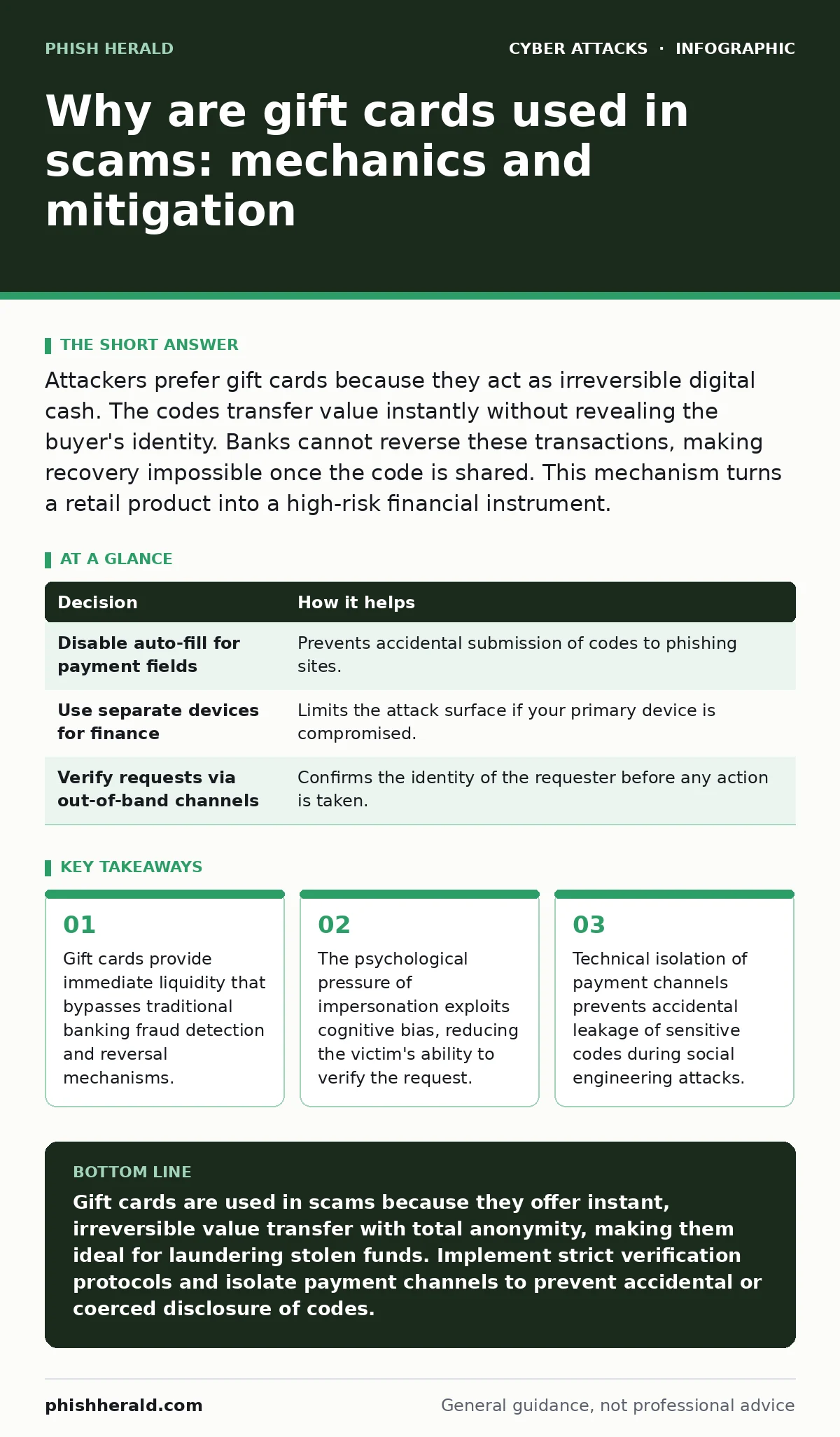
Gift cards function as digital cash for attackers because they combine instant liquidity with near-total anonymity, bypassing traditional financial fraud detection systems.
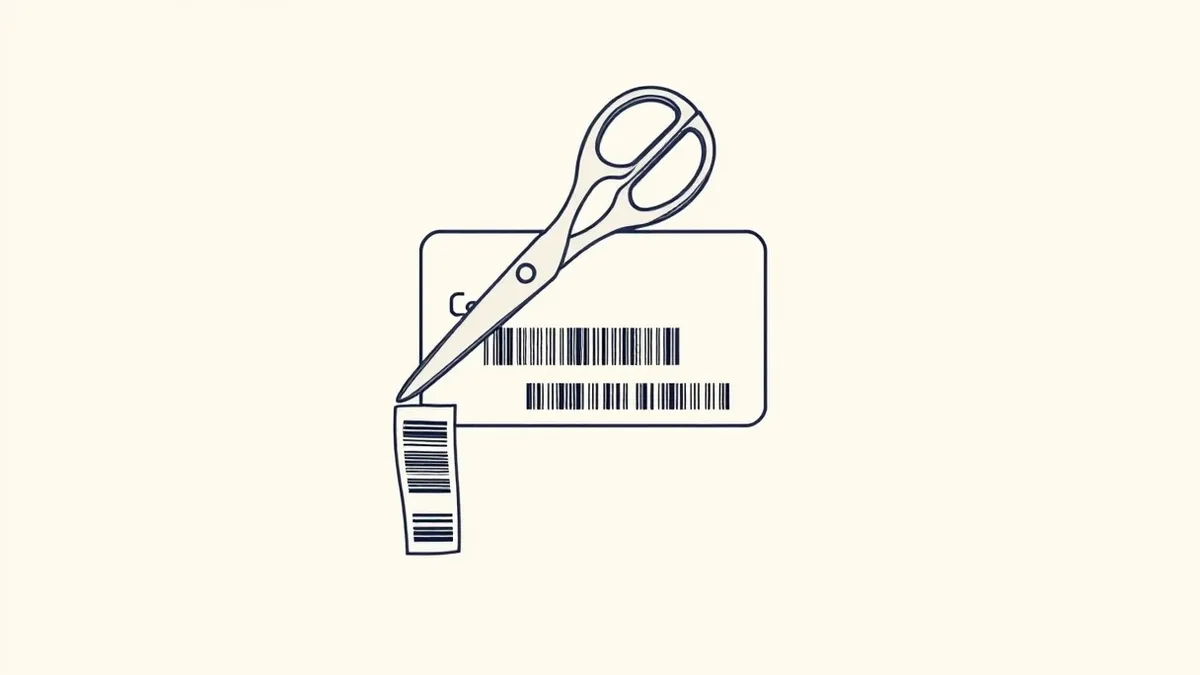
Attackers prefer gift cards because they act as irreversible digital cash. The codes transfer value instantly without revealing the buyer's identity. Banks cannot reverse these transactions, making recovery impossible once the code is shared. This mechanism turns a retail product into a high-risk financial instrument.
Why are gift cards used in scams
Gift cards are used in scams because they function as untraceable, irreversible digital cash. When you purchase a card, you exchange fiat currency for a prepaid balance. The attacker receives the code, which represents that value. Unlike a credit card transaction, the money cannot be clawed back once the code is revealed. The transfer happens instantly. The attacker redeems the balance before you or your bank can react. This speed creates a permanent loss.
The anonymity is absolute. Retailers do not link the card code to the purchaser's identity in a way that law enforcement can easily reverse. The code is the only thing that matters. Once entered into an online store or exchanged for cryptocurrency, the trail goes cold. This structural feature makes the product ideal for laundering stolen funds or extracting value from compromised accounts.
The mechanics of irreversible value transfer
The core mechanism is the finality of the transaction. When you hand over a card code, you are handing over the asset itself. There is no pending state. There is no dispute window. The retailer sees a valid code and credits the balance. The previous holder loses access. This differs from wire transfers, which often have a short window for interception. Gift cards have zero latency.
Attackers exploit this by demanding codes via text or email. They often provide multiple codes to enter. This fragments the value, making it harder to track. Some cards are region-locked, forcing the victim to buy from specific retailers. This adds a layer of friction that distracts from the urgency. The friction does not protect you. It only slows the attacker down slightly.
Psychological pressure and cognitive overload
The technical ease of theft is matched by psychological manipulation. Attackers impersonate trusted entities. They claim your account is locked or that you owe a tax debt. They create a sense of immediate danger. You are told to act now. Thinking is discouraged. Verification is framed as a delay that will result in penalty.
This pressure bypasses your critical thinking. You focus on the threat, not the method. The request for gift cards seems absurd only when you have time to reflect. In the moment, the authority figure demands compliance. The medium of communication matters. A phone call feels more urgent than an email. A text message feels more personal. Attackers choose the channel that maximizes emotional response.
Technical isolation of payment channels
You must separate your payment methods from your communication tools. If your email client or messaging app can interact with your wallet, you are vulnerable. Attackers use HTML smuggling to hide malicious payloads in seemingly benign messages. These payloads can trigger actions on your device. If your device can purchase cards automatically, the attack is silent.
Ensure your payment applications require biometric or manual confirmation for every transaction. Do not store gift card codes in your clipboard. Do not save them in password managers. These tools are designed for reuse, but gift card codes are single-use assets. Treating them as credentials increases risk. They are cash, not keys.
| Decision | How it helps |
|---|---|
| Disable auto-fill for payment fields | Prevents accidental submission of codes to phishing sites. |
| Use separate devices for finance | Limits the attack surface if your primary device is compromised. |
| Verify requests via out-of-band channels | Confirms the identity of the requester before any action is taken. |
Domain spoofing and initial access
Attackers often begin with domain spoofing to appear legitimate. They register domains that look like your bank or employer. The difference may be a single character. You click the link. You land on a fake login page. This is initial access. The attacker now has your credentials. They use these credentials to reset your password or request support.
From there, they pivot to gift cards. They claim your account is compromised and need to secure it with a prepaid card. This is a common narrative. It leverages your trust in the brand. You believe you are helping the institution. You are actually funding the attacker. The spoofed domain provides the credibility needed to overcome your skepticism.
Adversary-in-the-middle phishing risks
Some attacks use adversary-in-the-middle phishing. The attacker sits between you and the real service. You type your credentials into what you think is the real site. The attacker forwards them to the real site. You get a success message. The attacker now has your session. They can act as you.
This method is harder to detect. The URL may look correct. The branding is perfect. The attacker can see your screen if they have installed malware. They can guide you to buy cards. They can read the codes as you type them. This is not just a social engineering attack. It is a technical breach. Your defenses must include certificate pinning and strict URL validation.
Network segmentation and internal controls
For organisations, network segmentation is vital. Isolate payment systems from general user networks. Employees should not be able to access financial tools from standard workstations. This limits the damage if a user is phished. The attacker gains access to the email network, but not the payment network.
Implement strict policies for high-value transactions. Require dual approval for any purchase over a certain amount. This adds a step that slows down the attacker. It also provides a checkpoint for detection. If an employee tries to buy fifty gift cards, the system should flag it. Automated rules can stop the transaction before it completes.
What to do with that knowledge
You must change how you view gift cards. They are not gifts. They are financial instruments with high risk. Treat them like cash. Do not keep them in your wallet. Do not store the codes digitally. If you receive a request for a gift card, assume it is a scam. Verify it through a known, trusted channel.
Educate your team on the mechanics. Explain why the code cannot be reversed. Show them the speed of the theft. Use real examples. Train them to recognise the pressure tactics. If they feel rushed, they should pause. A legitimate request can wait. A scammer cannot. Use this pause to verify.
Long-term defence strategies
Your defence must be layered. Technical controls alone are not enough. You need human awareness. People need to understand the trade-offs. Convenience is sacrificed for security. Buying cards is easy. Protecting them is hard. You must accept the friction.
Regularly review your access logs. Look for patterns. Unusual login locations, multiple failed attempts, requests for sensitive data. These are indicators of compromise. Act on them quickly. Reset credentials. Block access. Investigate the source. Continuous monitoring is the only way to catch sophisticated attacks.
Conclusion of risk assessment
The risk is not just financial. It is reputational. If your team is phished, your security posture is questioned. Trust is eroded. Rebuilding it takes time. Preventing the initial loss is cheaper than managing the fallout. Focus on prevention. Focus on verification. Focus on isolation. These three pillars protect you from the majority of attacks.
Remember that attackers adapt. They change their tactics. They find new angles. Your defences must evolve. Stay informed. Update your policies. Test your team. Security is a process, not a product. It requires constant attention. It requires vigilance. It requires discipline.
Key takeaways
- Gift cards provide immediate liquidity that bypasses traditional banking fraud detection and reversal mechanisms.
- The psychological pressure of impersonation exploits cognitive bias, reducing the victim's ability to verify the request.
- Technical isolation of payment channels prevents accidental leakage of sensitive codes during social engineering attacks.
Gift cards are used in scams because they offer instant, irreversible value transfer with total anonymity, making them ideal for laundering stolen funds. Implement strict verification protocols and isolate payment channels to prevent accidental or coerced disclosure of codes.
Frequently asked questions
Can I cancel a gift card after giving the code?
No, most retailers cannot cancel a card once the code is revealed and the balance is accessed. The transaction is treated as a cash exchange, which is final and irreversible.
How do I verify a request for gift cards?
Hang up or close the message. Contact the organisation using a phone number or email address you already have on file, not the one provided in the suspicious request.
Are digital gift cards safer than physical ones?
No, digital cards are often riskier because the code is delivered electronically, making it easier for attackers to steal via phishing or malware. Physical cards require physical possession.
What is HTML smuggling in this context?
HTML smuggling hides malicious code within a benign-looking email or webpage. When opened, it can trigger downloads or actions that steal data or facilitate the purchase of gift cards without your direct interaction.
How this guide was produced: written by the Phish Herald editorial team with AI assistance, checked against the public references listed below, and reviewed when the facts change. See our editorial policy or report an error.