Threat Modeling Designing for Security: A Structural Approach
Threat modeling shifts security from reactive patching to proactive architecture, exposing flaws in logic and data flow before code is written or deployed.
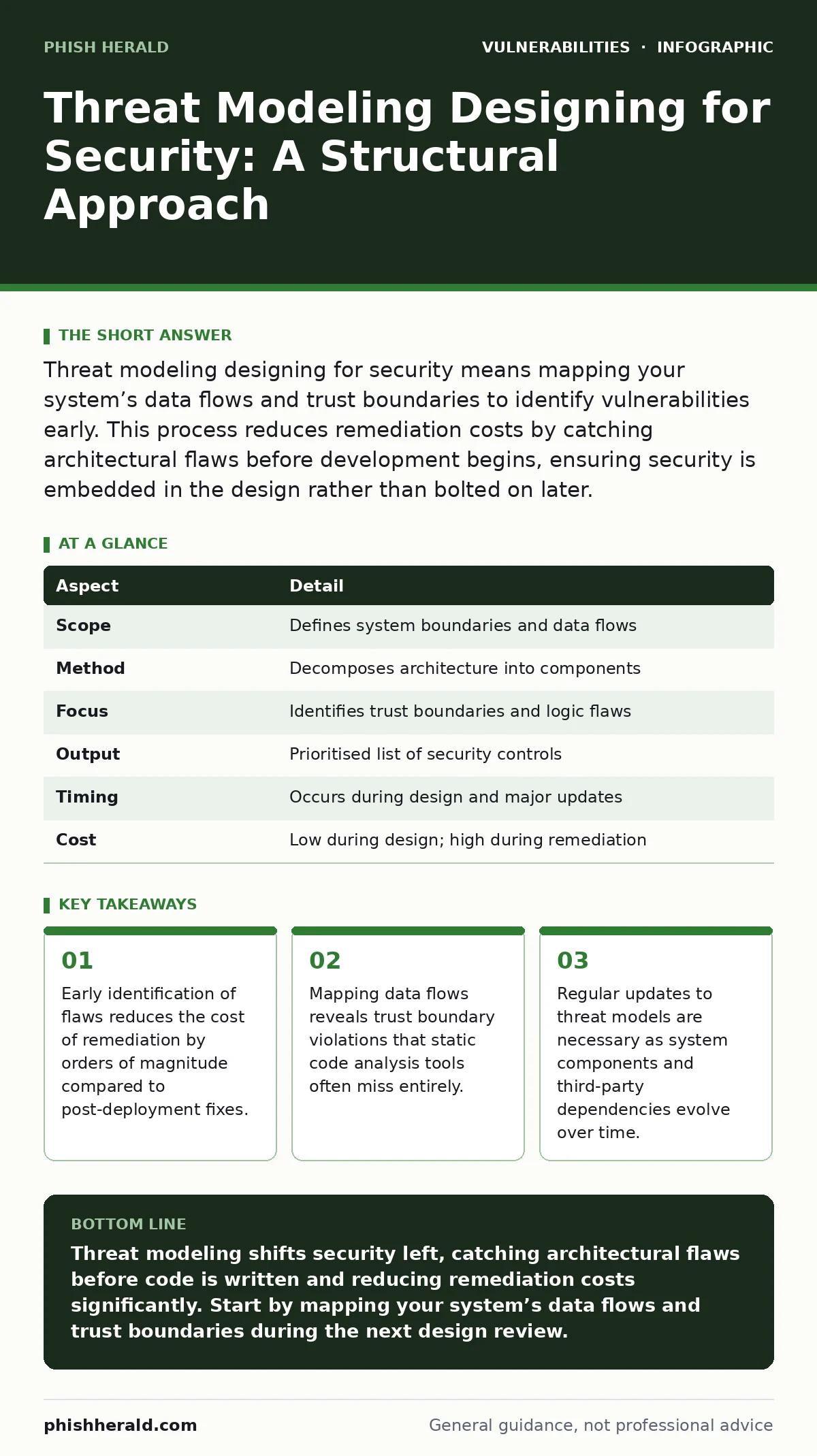
Threat modeling designing for security means mapping your system’s data flows and trust boundaries to identify vulnerabilities early. This process reduces remediation costs by catching architectural flaws before development begins, ensuring security is embedded in the design rather than bolted on later.
The Anatomy of a Digital Lock
Imagine you are designing a physical vault. You do not start by selecting the best steel or the most complex tumblers. You first decide what is inside, who needs access, and how the door opens. Threat modeling designing for security follows this same logic. It is the practice of systematically identifying potential threats and vulnerabilities within a system’s architecture before implementation. This definition establishes the baseline for secure design.
You are not looking for code bugs; you are looking for structural weaknesses. The goal is to understand how an attacker might interact with your system’s components. This shifts the focus from perimeter defense to internal integrity. You define what needs protection and why it matters. This clarity prevents wasted effort on low-risk areas. It ensures resources target the highest value assets. The process is iterative and continuous. It adapts as the system changes.
How the Process Works in Practice
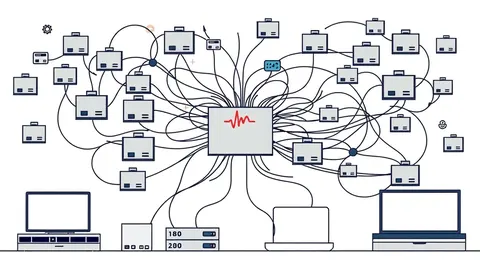
The mechanism relies on decomposing the system into manageable parts. You create a visual representation of data movement. This map shows where data enters, where it is processed, and where it leaves. You then identify trust boundaries. These are points where data moves between zones of different security levels. An attacker crossing these boundaries requires different techniques than one staying within a zone. You assign threats to each component and boundary.
Common frameworks categorise these threats into categories like spoofing, tampering, and information disclosure. You assess the likelihood and impact of each threat. This prioritisation allows you to focus on the most dangerous risks. You then define countermeasures for each high-priority threat. These countermeasures become part of the design requirements. The output is a set of security controls integrated into the architecture. This integration ensures security is not an afterthought.
| Aspect | Detail |
|---|---|
| Scope | Defines system boundaries and data flows |
| Method | Decomposes architecture into components |
| Focus | Identifies trust boundaries and logic flaws |
| Output | Prioritised list of security controls |
| Timing | Occurs during design and major updates |
| Cost | Low during design; high during remediation |
Who Bears the Risk
This practice affects every stakeholder in the software lifecycle. Developers benefit from clear security requirements early in the process. They do not need to guess what is secure. Architects gain a holistic view of system interactions. They can spot design patterns that introduce unnecessary complexity. Security teams shift from gatekeeping to enabling. They provide guidance rather than blocking releases.
Business owners understand the risk profile of their products. They can make informed decisions about acceptable risk. The entire organisation aligns on security goals. This alignment reduces friction between teams. It creates a shared language for discussing risk. Everyone understands why certain controls exist. This transparency improves accountability. It ensures security is a collective responsibility.
Common Pitfalls in Execution
Many organisations treat threat modeling as a one-time event. They create a model at the start of a project and never update it. This approach fails because systems evolve. New features introduce new attack surfaces. Third-party libraries change. Infrastructure updates shift trust boundaries. A static model becomes obsolete quickly. Another common error is focusing only on external threats.
Internal threats are often more damaging. Insiders have legitimate access. They bypass perimeter controls. Ignoring insider risk leaves a major gap. Some teams also rely too heavily on automated tools. Tools cannot understand business context. They miss logic flaws. Human analysis is required to interpret the model. Without human insight, the model is just a diagram. It lacks strategic value.
Integrating with Secure Development
Threat modeling integrates with other security practices. It informs how you handle input validation. By knowing where data enters, you can define strict validation rules. It guides the implementation of broken access control checks. You identify where access decisions are made and ensure they are consistent. It helps prevent path traversal vulnerabilities by mapping file system interactions.
You see where user input affects file paths. This visibility allows you to restrict access appropriately. It also supports the configuration of web application firewalls. You know what normal traffic looks like. You can tune the firewall to block anomalies. This integration ensures consistency across the stack. It prevents security gaps between layers.
See also: Hardcoded Secrets Myths: Why Common Beliefs About Source Code Risks Are Wrong · Apache Struts Vulnerabilities: Real Questions Answered for Secure Infrastructure
The Hidden Cost of Delay
Delaying threat modeling until after development is expensive. Fixing a design flaw in production requires significant effort. You may need to rewrite code. You might need to change database schemas. You could have to retrain users. The cost multiplies with each stage of the lifecycle. Early detection is cheap. It involves discussion and diagramming. It does not require coding. It does not require testing infrastructure. It requires time and expertise. This time investment pays off later. It reduces the burden on security teams. It prevents emergency patches. It maintains system stability. The financial impact is clear. Early design changes are minor. Late design changes are major.
Addressing Design-Specific Risks
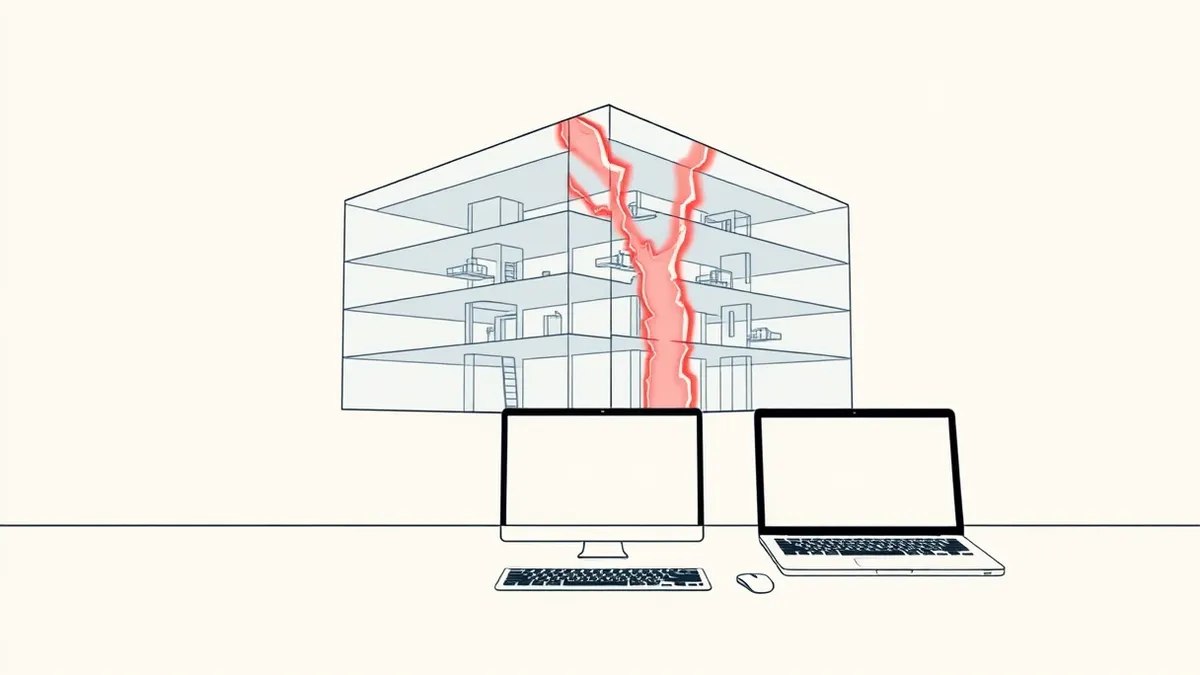
Threat modeling designing for security specifically targets architectural risks. These are risks that code alone cannot fix. For instance, web cache poisoning occurs when cache keys are not properly constructed. Threat modeling identifies how cache keys are generated. It ensures they include all relevant user context. This prevents leakage of sensitive data between users.
Similarly, open redirect vulnerabilities arise from improper handling of URLs. The model shows where redirects happen. It ensures validation occurs before the redirect. This prevents phishing attacks. These risks are structural. They require design-level fixes. Code-level fixes are often band-aids. They do not address the root cause. Threat modeling exposes the root cause. It allows for a permanent solution.
Maintaining the Model Over Time
Maintenance is the most challenging part of threat modeling. Systems change frequently. New features are added. Old features are removed. Dependencies are updated. The model must reflect these changes. You should tie model updates to your development cycle. Include threat modeling in your sprint planning. Review the model during design reviews. Update it when architecture changes. This keeps the model accurate. It ensures continued relevance. It provides a current view of risk. It supports ongoing security decisions. This discipline prevents drift. It ensures the model remains a useful tool. It becomes a source of truth for security.
Final Considerations for Implementation
Implementing threat modeling requires cultural change. It requires buy-in from leadership. It requires training for technical staff. It requires integration into existing processes. Start small. Model a single component or service. Learn from the experience. Expand to larger systems. Use standard frameworks to guide the process. Encourage collaboration across teams. Share findings openly. Celebrate identified risks. This creates a positive security culture. It reinforces the value of the practice. It ensures long-term success. The goal is not perfection. The goal is continuous improvement. It is about making better decisions. It is about reducing risk. It is about building trust.
Key takeaways
- Early identification of flaws reduces the cost of remediation by orders of magnitude compared to post-deployment fixes.
- Mapping data flows reveals trust boundary violations that static code analysis tools often miss entirely.
- Regular updates to threat models are necessary as system components and third-party dependencies evolve over time.
Threat modeling shifts security left, catching architectural flaws before code is written and reducing remediation costs significantly. Start by mapping your system’s data flows and trust boundaries during the next design review.
Frequently asked questions
How often should I update my threat model?
Update your threat model whenever there are significant changes to the system architecture, data flows, or third-party dependencies to ensure it remains accurate.
Can automated tools replace manual threat modeling?
Automated tools can assist by identifying known vulnerabilities, but they cannot understand business context or logic flaws, so manual analysis remains necessary.
What is the first step in threat modeling?
The first step is to define the scope of the system and create a data flow diagram that maps all components, trust boundaries, and data movements.
Does threat modeling guarantee security?
No, threat modeling identifies risks and guides mitigation strategies, but it does not eliminate all vulnerabilities or guarantee complete protection against every attack.
How this guide was produced: written by the Phish Herald editorial team with AI assistance, checked against the public references listed below, and reviewed when the facts change. See our editorial policy or report an error.