Patch Prioritization Logic: How to Rank Fixes by True Risk
Patch prioritisation separates urgent security fixes from routine updates by analysing exploitability and asset exposure, preventing system downtime caused by indiscriminate patching.
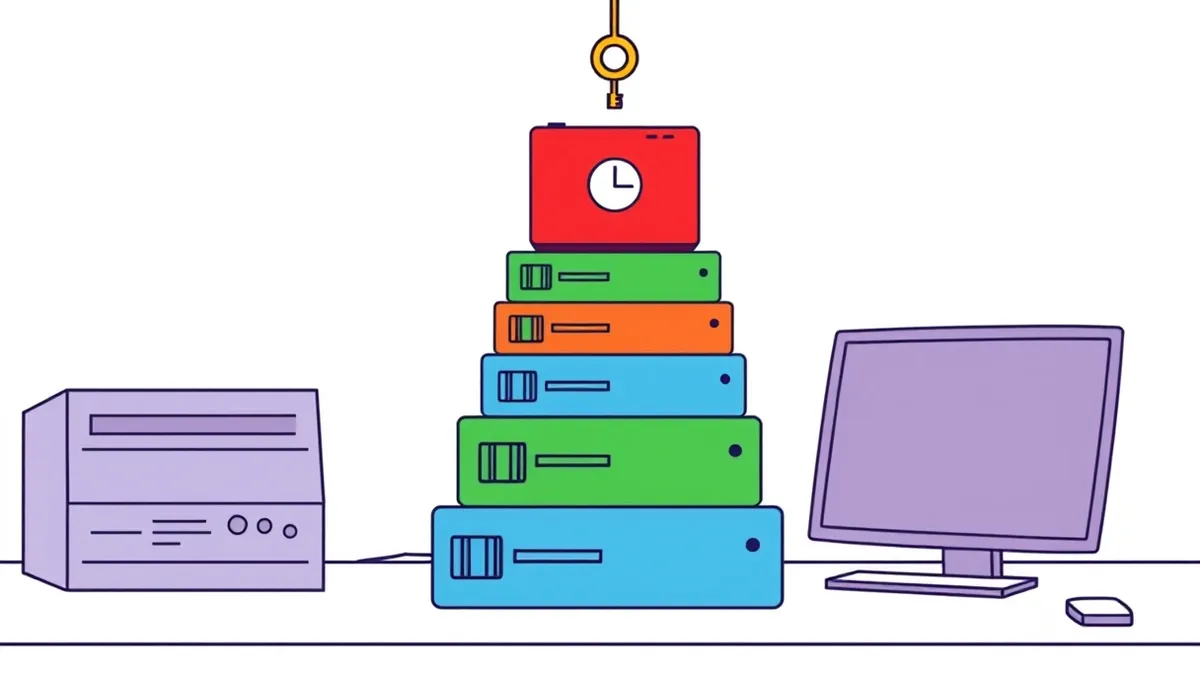
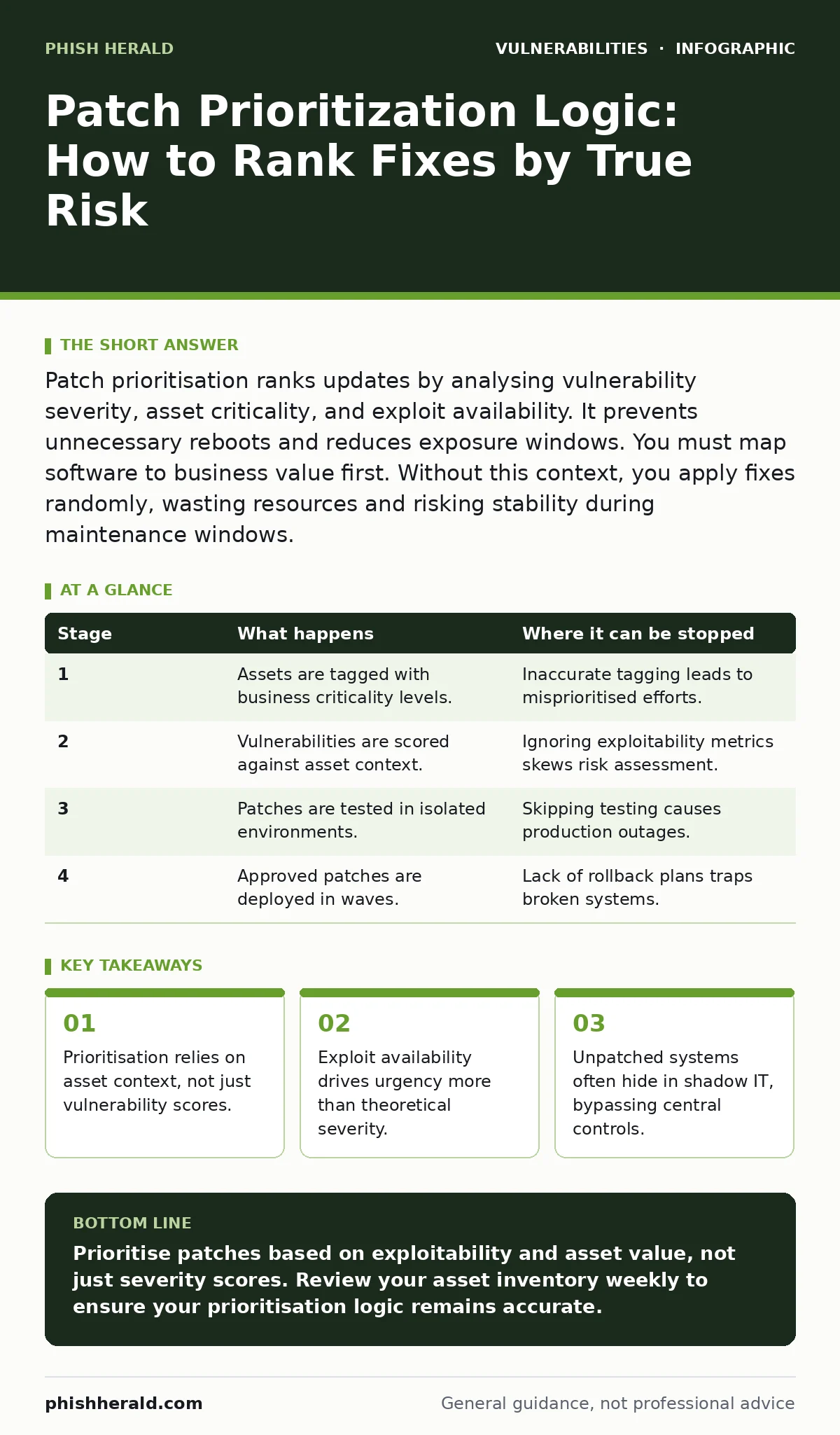
Patch prioritisation ranks updates by analysing vulnerability severity, asset criticality, and exploit availability. It prevents unnecessary reboots and reduces exposure windows. You must map software to business value first. Without this context, you apply fixes randomly, wasting resources and risking stability during maintenance windows.
The Foundation of Risk Context
You cannot prioritise what you do not know exists. Patch prioritisation begins with an accurate inventory of every software component across your infrastructure. This includes operating systems, libraries, and third-party applications. Many organisations rely on manual spreadsheets or outdated discovery tools. These sources fail to capture ephemeral containers or serverless functions. An incomplete inventory creates blind spots where critical vulnerabilities remain unaddressed. You must integrate automated discovery tools into your deployment pipeline. This ensures every new asset registers immediately. Without real-time visibility, your prioritisation model is built on stale data.
Stage 1: Asset Classification and Valuation
Stage 1: Asset Classification and Valuation
The first stage assigns business value to each asset. Not all servers hold equal weight. A public-facing web server requires faster remediation than an isolated development database. You classify assets by their role in business continuity. Critical infrastructure receives the highest priority tier. This tier includes systems processing customer data or supporting revenue-generating services.
Secondary assets support internal operations but tolerate brief downtime. You map each software instance to its host asset. This link determines the blast radius of a potential breach. If a vulnerability affects a non-critical asset, you may delay patching until the next scheduled maintenance window. This approach balances security with operational stability.
| Stage | What happens | Where it can be stopped |
|---|---|---|
| 1 | Assets are tagged with business criticality levels. | Inaccurate tagging leads to misprioritised efforts. |
| 2 | Vulnerabilities are scored against asset context. | Ignoring exploitability metrics skews risk assessment. |
| 3 | Patches are tested in isolated environments. | Skipping testing causes production outages. |
| 4 | Approved patches are deployed in waves. | Lack of rollback plans traps broken systems. |
Stage 2: Vulnerability Intelligence Integration
Stage 2: Vulnerability Intelligence Integration
The second stage enriches vulnerability data with external intelligence. Common Vulnerability Scoring System (CVSS) scores provide a baseline, but they lack context. CVSS measures technical severity, not business impact. You must layer exploit availability data on top of CVSS. If a proof-of-concept exploit exists publicly, the urgency increases dramatically.
You also monitor threat intelligence feeds for active targeting. Some vulnerabilities remain dormant for months. Others see immediate weaponisation. You adjust priorities based on this activity. A moderate-severity flaw with an active exploit moves to the top of your queue. This dynamic adjustment prevents you from chasing theoretical risks while ignoring active threats.
Imagine a scenario where a low-severity library update is released. Standard protocols would deprioritise it. However, threat actors have already chained this flaw with broken access control techniques to gain initial entry. Your intelligence layer flags this combination. You elevate the patch priority immediately. This proactive shift prevents a breach that static scoring would miss. You must train your team to recognise these compound risks. Single-vulnerability views are insufficient in modern attack chains.
Stage 3: Exploitability and Attack Surface Analysis
Stage 3: Exploitability and Attack Surface Analysis
The third stage evaluates how easily an attacker can reach the vulnerable component. A severe vulnerability inside a closed network poses less immediate risk than a moderate flaw on a public endpoint. You analyse the attack surface to determine reachability. Is the vulnerable service exposed to the internet? Does it require authentication?
If authentication is strong, the risk drops. You also consider network segmentation. If the vulnerable system sits behind multiple firewalls, the attack path becomes complex. You map these paths to calculate a realistic risk score. This stage often reveals that many high-CVSS scores are irrelevant to your specific environment. You ignore noise and focus on accessible weaknesses.
Stage 4: Patch Testing and Validation
Stage 4: Patch Testing and Validation
The fourth stage ensures patches do not break existing functionality. Applying a fix without testing can cause more damage than the vulnerability itself. You deploy patches to a staging environment that mirrors production. This environment includes representative data and traffic patterns. You run automated regression tests to catch conflicts.
You also perform manual checks for critical applications. If a patch introduces instability, you reject it and seek alternatives. These alternatives might include virtual patching or network-level controls. You document the test results for audit purposes. This step protects your business continuity. Rushing this stage leads to costly outages that distract from security goals.
See also: Detecting npm Package Vulnerabilities in Your Supply Chain · Hardcoded Secrets Myths: Why Common Beliefs About Source Code Risks Are Wrong
Stage 5: Phased Deployment and Rollback
Stage 5: Phased Deployment and Rollback
The final stage deploys patches in controlled waves. You never push updates to all systems simultaneously. You start with a small pilot group. This group includes non-critical systems and willing test users. You monitor for errors and performance degradation. If issues arise, you halt the rollout and investigate. If the pilot succeeds, you expand to broader groups.
Each wave increases in size. You maintain a rollback plan for every deployment. If a patch fails in production, you revert to the previous state immediately. This minimises downtime. You also verify the patch applied correctly. Some installations fail silently. You scan systems post-deployment to confirm remediation. This verification closes the loop.
Limits of Automated Prioritisation
Automated tools cannot account for every nuance. They rely on metadata and known patterns. Custom applications often lack proper metadata. These systems require manual assessment. You must review patches for bespoke software personally. Automated systems also struggle with dependency conflicts. They may recommend patches that are mutually exclusive.
You need human oversight to resolve these conflicts. Additionally, prioritisation models assume static environments. Cloud environments change rapidly. Instances spin up and down. Your tools must update inventory in real-time. If they lag, your priorities become obsolete. You must regularly audit your prioritisation logic. Ensure it aligns with current business goals and threat realities.
Integrating Broader Security Context
Patch prioritisation does not exist in isolation. It interacts with other security controls. For instance, unpatched systems often suffer from hardcoded secrets in source code. These secrets allow attackers to bypass authentication entirely. Even if you patch the software, the secret remains. You must combine patching with secret scanning. Similarly, file upload vulnerabilities often persist despite OS patches. The application logic remains flawed.
You must address application-level flaws separately. Understanding path traversal vulnerabilities helps you prioritise patches for web servers. These flaws allow attackers to access sensitive files. You must also consider GraphQL vulnerabilities in modern APIs. These require specific patching strategies. Finally, be aware of open redirect vulnerabilities in web applications. These facilitate phishing attacks. A holistic view ensures you do not fix one hole while ignoring others.
Key takeaways
- Prioritisation relies on asset context, not just vulnerability scores.
- Exploit availability drives urgency more than theoretical severity.
- Unpatched systems often hide in shadow IT, bypassing central controls.
Prioritise patches based on exploitability and asset value, not just severity scores. Review your asset inventory weekly to ensure your prioritisation logic remains accurate.
Frequently asked questions
How often should I update my patch prioritisation model?
Update your model whenever business processes change or new threat intelligence emerges. Quarterly reviews are a minimum standard.
Can I automate the entire patching process?
Automation handles discovery and deployment, but human judgment remains necessary for testing validation and resolving dependency conflicts.
What is virtual patching?
Virtual patching uses network devices to block exploit traffic targeting a vulnerability, providing protection until the actual software patch is applied.
How do I handle legacy systems that cannot be patched?
Isolate legacy systems from the network, restrict access strictly, and monitor them closely for signs of compromise.
How this guide was produced: written by the Phish Herald editorial team with AI assistance, checked against the public references listed below, and reviewed when the facts change. See our editorial policy or report an error.