Remediation Tracking: Fixing the Six Common Misconceptions
Tracking vulnerability remediation fails when teams confuse administrative closure with actual risk reduction, leaving hidden exposures in production systems.
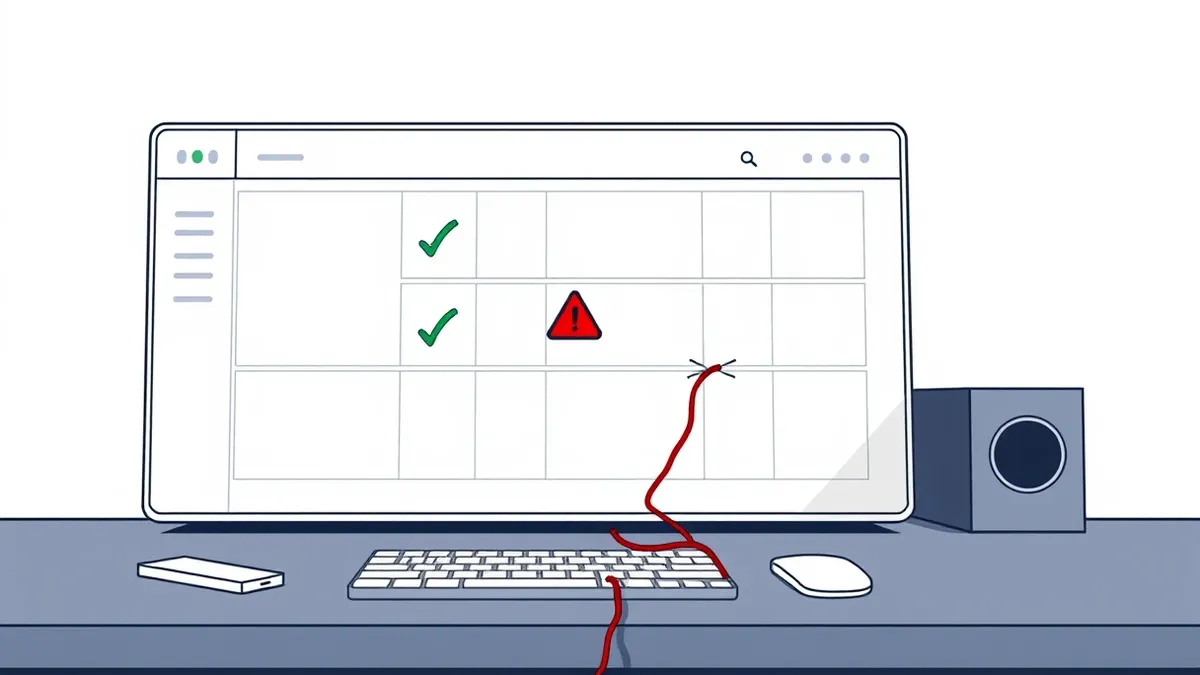
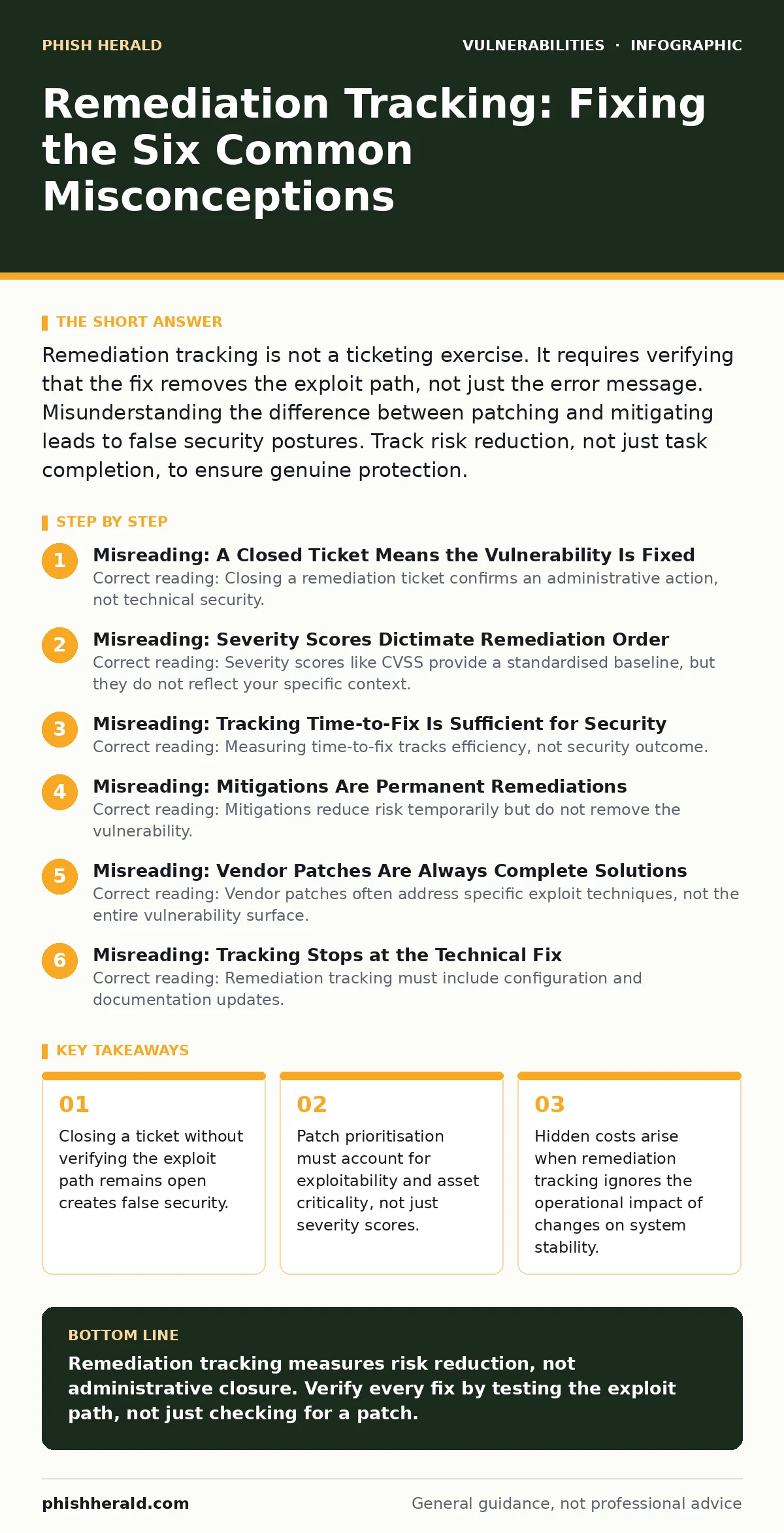
Remediation tracking is not a ticketing exercise. It requires verifying that the fix removes the exploit path, not just the error message. Misunderstanding the difference between patching and mitigating leads to false security postures. Track risk reduction, not just task completion, to ensure genuine protection.
Misreading: A Closed Ticket Means the Vulnerability Is Fixed
Correct reading: Closing a remediation ticket confirms an administrative action, not technical security. The vulnerability remains active until you verify that the exploit path is broken. Many teams mark issues as resolved after applying a patch, assuming the vendor guarantees protection. This assumption fails when patches require configuration changes or reboots to take effect.
Suppose an engineer applies a security update to a web server. The ticket system shows the task as complete. However, the service runs in a container that was not restarted. The old, vulnerable code continues to handle traffic. The vulnerability is still exploitable, despite the closed ticket. You must verify the fix in the production environment.
This verification step is often skipped because it takes time. Skipping it creates a gap between recorded security posture and actual risk. The record says safe; the system says exposed. You need a verification step that tests the specific vulnerability, not just the presence of the file. See our guide on patch prioritisation to understand how to order these tasks by actual risk, not just severity scores.
Misreading: Severity Scores Dictimate Remediation Order
Correct reading: Severity scores like CVSS provide a standardised baseline, but they do not reflect your specific context. A high-score vulnerability in an isolated system may pose less risk than a low-score issue in a public-facing gateway. Contextual risk factors include asset criticality, data sensitivity and network exposure.
Imagine two servers. One hosts a legacy internal tool with a known high-severity flaw. The other is a public API with a medium-severity flaw that allows remote code execution. The standard score suggests fixing the internal tool first. The correct decision considers reachability. The public API is directly accessible to attackers. The internal tool is behind multiple firewalls.
Prioritising by score alone ignores exploitability. Attackers target easy wins. They do not care about abstract scores. They care about access. Your tracking system must weight severity by exposure. This requires mapping assets to their network position. See threat modeling to learn how to map these connections and identify which vulnerabilities actually threaten your crown jewels.
Misreading: Tracking Time-to-Fix Is Sufficient for Security
Correct reading: Measuring time-to-fix tracks efficiency, not security outcome. A fast fix that introduces a regression or fails to address the root cause is worse than no fix. Speed without accuracy creates instability and leaves residual risk. You must track the quality of the remediation, not just the speed of the response.
Suppose a developer fixes a logic error in three hours. The fix works for the test case. However, the fix breaks authentication for a subset of users. The vulnerability is technically patched, but the system is now partially broken. The tracking system records a fast resolution. The security posture has degraded due to availability loss.
Efficiency metrics encourage rushing. Rushing leads to incomplete fixes. You need metrics that measure successful verification. This shifts the focus from speed to correctness. Fast is useless if the door is still open.
Misreading: Mitigations Are Permanent Remediations
Correct reading: Mitigations reduce risk temporarily but do not remove the vulnerability. Treating a mitigation as a final fix creates a false sense of security. Mitigations like network segmentation or firewall rules block specific attack vectors. They do not fix the underlying code or configuration flaw.
Imagine a server with a known remote execution flaw. You place it behind a strict firewall. The ticket is closed as "mitigated". Six months later, an internal user gains access to that network segment. The firewall rules no longer protect the server. The vulnerability is still present in the code.
Mitigations must have an expiry date. They are stopgaps while a proper fix is developed. Your tracking system should flag mitigations for review. If a mitigation stays in place for months, it becomes the de facto fix. This is dangerous. The underlying weakness remains. You must schedule a permanent remediation task alongside any mitigation.
Misreading: Vendor Patches Are Always Complete Solutions
Correct reading: Vendor patches often address specific exploit techniques, not the entire vulnerability surface. A patch might fix one code path but leave another vulnerable. Assuming the patch is comprehensive leads to incomplete remediation. You must review the patch notes and test for alternative exploit paths.
Suppose a software vendor releases a patch for a buffer overflow. The patch fixes the overflow in function A. However, function B has similar logic and lacks the same input validation. Attackers may pivot to function B. The ticket is closed based on the vendor release. The system remains vulnerable.
Vendor patches are starting points, not endpoints. Independent testing is required. You must verify that the patch covers all entry points. This is especially true for complex frameworks. See Apache Struts vulnerabilities for examples where patches required careful configuration to be effective. Blindly applying patches without verification leaves gaps.
See also: What Is Cache Poisoning: How It Works and How to Stop It · Zero-Click Attacks: Dispel Myths and Secure Your Infrastructure
Misreading: Tracking Stops at the Technical Fix
Correct reading: Remediation tracking must include configuration and documentation updates. A technical fix is useless if the system is misconfigured or if the team does not understand the change. Documentation ensures future maintenance does not reintroduce the vulnerability. Configuration ensures the fix persists through updates.
Imagine a database is patched to prevent injection. However, the application configuration still allows raw SQL execution. The patch is bypassed by the configuration. The ticket is closed. The next developer, unaware of the fix, reverts the configuration. The vulnerability returns.
Tracking must include a checklist. Did you update the configuration? Did you document the change? Did you notify the operations team? These steps are part of remediation. Ignoring them leads to drift. Drift erodes security over time. The fix must be sustainable.
Key takeaways
- Closing a ticket without verifying the exploit path remains open creates false security.
- Patch prioritisation must account for exploitability and asset criticality, not just severity scores.
- Hidden costs arise when remediation tracking ignores the operational impact of changes on system stability.
Remediation tracking measures risk reduction, not administrative closure. Verify every fix by testing the exploit path, not just checking for a patch.
Frequently asked questions
How do I verify a vulnerability is truly fixed without breaking production?
Use isolated staging environments that mirror production. Run the same exploit tests used to find the vulnerability. If the exploit fails in staging, proceed to production with monitoring. This balances safety with verification.
What is the difference between remediation and mitigation in tracking?
Remediation removes the vulnerability entirely. Mitigation reduces the likelihood or impact of exploitation. Tracking must distinguish between these. Mitigations require expiry dates and follow-up tasks. Remediations do not.
Should I track vulnerabilities that are not exploitable?
Yes. Non-exploitable vulnerabilities may become exploitable if the system changes. Tracking them ensures you know their state. You can deprioritise them, but you must still record their status. Ignoring them creates blind spots.
How often should I review closed remediation tickets?
Review a sample monthly. Look for patterns in verification failures. Check if mitigations have expired. This audit process identifies gaps in your tracking process. Regular reviews prevent drift and ensure continued security.
How this guide was produced: written by the Phish Herald editorial team with AI assistance, checked against the public references listed below, and reviewed when the facts change. See our editorial policy or report an error.